
How We Measure a Good Day
By the usual scoring system, a good day is one where the to-do list is shorter at bedtime than it was at breakfast. Deadlines met, boxes ticked, output achieved. Productivity is the yardstick, and most of us have been carrying it since school.
But you’ve probably run the experiment yourself without meaning to. You’ve gone to bed after a ferociously productive day feeling oddly hollow. And you’ve had days where you accomplished almost nothing by anyone’s official standards and felt quietly, deeply content.
Which suggests the yardstick is measuring the wrong thing. So let’s look at what else a good day might be made of.
The Old Measurement: Productivity Above All
Our culture isn’t subtle about this. From school grades to performance reviews, we’re trained to measure worth by output. “What did you do today?” is rarely a question. It’s an audit.
That’s why so many of us equate a good day with volume: did we finish the project, cross things off, prove ourselves useful?
The problem is what this measurement can’t see — the quiet, meaningful parts of a life that never appear on a chart or a CV. It turns living into a race of endless tasks where the finish line politely moves every time you approach it.
Eventually the yardstick stops motivating you and starts draining you. You end up exhausted and somehow still feeling behind.
The Subtler Measurement: Presence
Ever had a day where “nothing special” happened, yet you caught yourself smiling before bed?
Maybe it was morning light through the window. A real laugh with someone you love. A walk, a pause, one deep breath where you actually landed in the moment for once.
That’s presence, and it’s one of the clearest markers of a good day.
Presence means you lived the hours instead of racing through them. It’s the difference between eating a meal while scrolling and actually tasting the food. Between hearing someone while distracted and genuinely listening. Between sprinting to the end of the day and noticing the parts that made it worth having.
Measure your days by presence and even the ordinary ones start to count.
The Hidden Measurement: Connection
Another honest measure of a day: connection. With other people, and with yourself.
A day where you felt understood, supported, or simply close to someone you care about is almost always a good day. We’re built for it — we find it in laughter, in conversation, even in comfortable silence.
But connection isn’t only about other people. It includes you. Did you listen to what your body needed? Did you take your emotions seriously instead of brushing them aside? Did you allow yourself a moment of enjoyment, creativity, or rest without filing it under guilt?
Look back at your best days and you’ll notice most weren’t about grand achievements. They were moments of connection — feeling less alone, more yourself, more at peace with how things are.
The Lasting Measurement: Alignment
The measurement that holds up longest is alignment: living in line with what actually matters to you.
Alignment rarely looks like fireworks. It looks like small decisions that match your values. If health matters, a walk counts. If family matters, dinner together counts. If growth matters, one page of reading counts.
The question it answers is simple: did I live today in a way that reflects who I want to be?
When your days are aligned, they don’t need to be perfect to feel meaningful. Even hard days, even “unproductive” ones, can still land as good — because they carried integrity, honesty, or love.
Redefining a Good Day
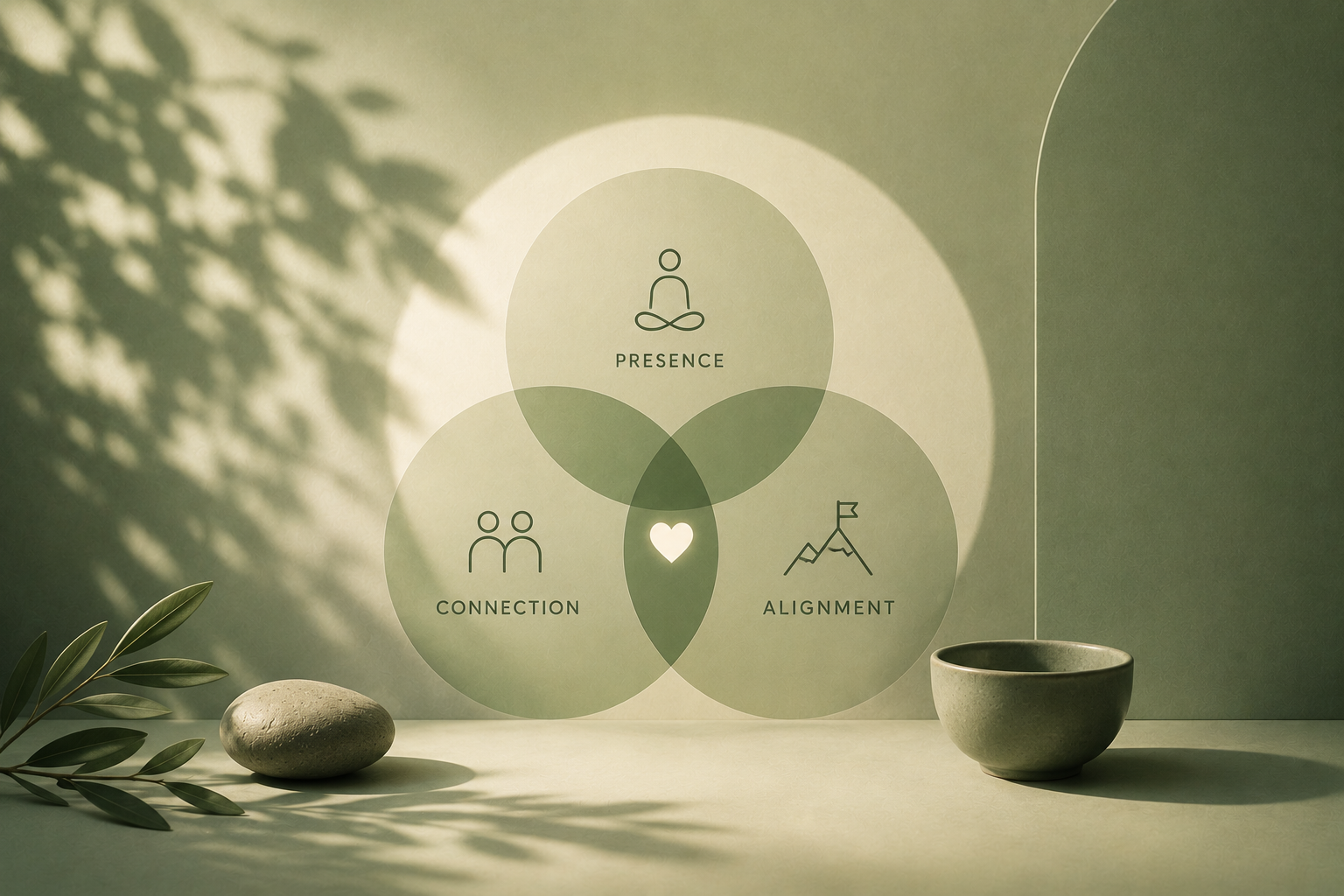
So what makes a day genuinely good? Not productivity alone. A balance of three things:
Presence — were you actually here for your own life? Connection — did you feel closer to yourself, to others, or to something bigger? Alignment — did your choices reflect your values?
Achievement still gets a seat at the table. Things need doing; nobody’s arguing otherwise. But when output is the only judge, you miss most of what makes a life rich.
A good day isn’t a perfect day. It doesn’t require happiness every minute or a total absence of stress. Sometimes a good day is just one where you showed up as yourself, stayed close to what matters, and let yourself actually experience it.
A Gentle Experiment
Here’s the practical bit. Tonight, instead of asking “What did I accomplish?”, ask three different questions:
What moments did I notice today? Who or what did I feel connected to? Did I live one step closer to my values?
You may be surprised how often a day that looks average on paper turns out to be a good one in memory.
Closing Thought
We get a limited number of days. Grading them purely on productivity is like judging a book by how many pages you got through, never mind the story.
A good day is one that was actually lived — noticed, felt, and in line with who you are. Measure that instead.